Angel Docampo

Cloud & DevOps Engineer on AIsteroids

"Yes, I am a criminal. My crime is that of curiosity. My crime is that of judging people by what they say and think, not what they look like."
— The Mentor

About Me

I'm a computer enthusiast born and raised in Barcelona. Since I was 8 years old, tinkering with an ancient Amstrad CPC 464, I have been fascinated by computers. I started studying electronics and computing in the early 90's and soon discovered GNU/Linux, which not only added fun to computing but introduced me to the powerful concept of sharing knowledge.

I am deeply convinced that Open Source is driving mankind toward its next great leap: the Age of Knowledge. Over the years, I've evangelized free software through blogs, non-profit organizations, and community events, helping many clients break free from proprietary chains and take full control of their systems.

My career has evolved from systems administration through cloud infrastructure and DevOps engineering — working with OpenStack, Ceph, Kubernetes, and GitLab CI/CD — to exploring the frontiers of AI and LLMs. Today I build tools and workflows that leverage generative AI and agentic development, always with the open source spirit as my compass. The future I dreamed of as a kid is finally arriving, and I want to make sure it's open and accessible to everyone.

Angel Docampo

Barcelona

docampo.net

Skills

Cloud & Infrastructure
OpenStack Ceph Ansible
DevOps & CI/CD
GitLab CI/CD Docker Kubernetes Git
AI & Development
Python Bash LLM Agentic Dev Generative AI HITM Coding
Systems & Networking
GNU/Linux Networking Storage Virtualization Security

Education & Experience

Education

2006 – 2007
Bachelor's Degree
Universtitat Autònoma de Barcelona
I completed 2/3 of the career, but sadly, I had to left my Bs in CS unfinished. A pending task hopefully some day I will finish
2004 – 2006
Bachelor's Degree
Universtitat Rovira i Virgili
I've started the university career on this one, luckily, after two years, I got a place on UAB, so I saved 200Km/day.
2002 – 2004
Associate's Degree
IES La Guineueta
I got here my Associate's Degree on Application Development, althoug nowadays I do not develop actively, I fear not the code!
1992 – 2000
Electronics Degree
IFP La Guineueta
This was the starting point to everything I love today, and let me how machines works know at low level.
Online Courses
  • 2026 Agentic Development (January–March 2026)
  • 2025 HITM Coding (September–November 2025)
  • 2025 Generative AI (March–April 2025)
  • 2024 LLM (2024)
  • 2016 Linux Foundation Certified SysAdmin (Linux Foundation)
  • 2015 Machine Learning (Coursera)
  • 2014 Programming for Everybody — Python (Coursera)
  • 2013 Introduction to Artificial Intelligence (Stanford)

Experience

2023 – Currently
NFVI DevOps Engineer
T-Systems Iberia
Working in TDI, the Cloud division of Deutsche Telekom, we provide cloud environments for NatCos around the world. I've been in the IaaS gang, in which our main technologies were OpenStack, Ceph, GitLab CI/CD, and dozens of other open source technologies
2018 – 2023
GNU/Linux Sr Administrator
Eonian Tec S.L.
Public and private cloud, managing hundreds machines and thousands services. VDI and hyperconvergence solutions. On-premise Kubernetes management. Python development. Site Reliability Engineer.
2011 – 2018
GNU/Linux Sr Administrator
DLTec
Open Source Hyperconvergence, mid to large-scale migrations, or any open source solution adapted to our clients
2007 – 2011
Systems Administrator
Grupo Pacífico
I was the person in charge of all the IT and Telecom systems of the entire group, with 6 offices all around Spain and 150 employees
2005 – 2007
Windows Administrator
Barcelona On-Line
System Administrator while studying the career on this booking and tourism portal giving support to the office and platform
2003 – 2004
IT Specialist
Diurnus
Field technician, giving in situ support both to users and server infraestructure
2001 – 2003
T-SQL Developer
Polyconcept
Development of a custom application in .NET, doing the reporting in Transact SQL
1999 – 2001
Telecom Specialist
Menta
Field installer and maintenance technician of a Catalan telecom fiber channel provider

Projects

Active
Shout
In Development

Desktop-agnostic voice-to-text tool inspired by superWhisper for Mac. Designed to work on Linux desktops, phones, and as a virtual keyboard addon. Basic functionality working, not yet public.

2025 — present Coming soon
Literary Writing
In Progress

A novel in progress. I hope to publish it in the not-too-distant future.

Ongoing
Alexa Skills
Private

Custom Alexa skills developed for personal use, not yet published.

Personal
Lab / Ideas
Voice-Controlled Linux Desktop
Concept

A vision for controlling a Linux desktop entirely by voice, using a small quantized LLM running on modest hardware — from opening apps and dictating text to interacting with terminal and desktop applications through natural language. Targeting consumer-grade GPUs (4GB) or just CPU with some RAM.

Future project
Archive
OVOS Smart Speaker

Smart speaker with touch screen built with Open Voice OS.

~2022
Magic Mirror

DIY smart mirror, now decorative in the living room.

~2020
Mycroft AI

Open source AI assistant — contributed Spanish translations and skill development.

~2017–2018
Qbo Robot

Open source robot platform — explored ROS framework and custom hardware.

~2017
Z-Wave Smart Home

Home automation with Z-Wave protocol and Home Assistant.

~2016–2018

Know Me Better

Some stuff I'm worried about technology

There is another way
There is another way...

My first PC (an Amstrad PC 1512) came with a crappy version of MS DOS. After a while of using it, I decided it didn't satified my needs, and began to investigate for alternatives in the monthly journals. That's how I met DRDOS. It was far more powerful and let me do more with the same. I realized then there are always more than the way companies pretend you to use a computer.

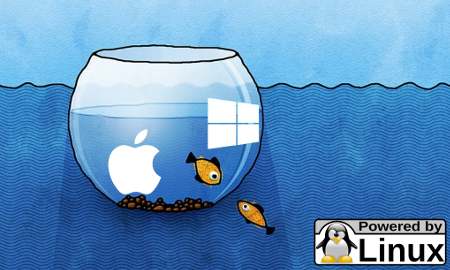
Years later, tired of so many BSOD of the Windows 95, I discovered another interesting operative system called "SuSE", and despite the ugliness of the desktop, I did found it very fun, and I started to learn just for curiosity which today is my everyday job.

Thanks to Linux, you learn something new every day, every task can be accomplished in a myriad of ways, and always there is a better way to do everything. Freedom of choice: one of the mantras of GNU means this. Users of other OSes can see this overwhelming and perhaps chaotic, but I love to learn and thanks to the open source, we can do with the computers what we want, not what companies want us to do.

Experience has teach to me that closed operative systems slaves its users with heavy chains. They can be in fact great tools to make everything, but in the end, users are limited to what the real owners of the OS -the company who created it- designed for it. That's is the reason why since early 2000 I promote the use of GNU/Linux and open source tools to everyone who wants to hear me.

It's all about choices

Internet providers, email providers, streaming providers, cloud providers... there are a lot of services we have at our reach and we not only should select those which price is low, but also who cares about our privacy, the neutrality and democracy. A fair provider who doesn't play dirty with us. Information of the market, both commercial and community, will empower us, so I strive to be up to date.

Of course, yet I'm still using commercial providers who are evil (wink wink, nudge nudge), I always search for alternatives, so, since some years ago, I'm using duckduckgo as my main search engine, nextcloud as my cloud provider, and plex (and Netflix) as my streaming provider, to name a few, and a plenty of open source desktop and mobile apps which connect to my own hosted services. I'm now in the process to migrate from gmail to my own email/groupware server to be completely free from any company.

I finally realized that no other provider will care the most for me and my people than myself, so after finding a good ISP provider, I'm hosting all my needed services at home.

Yes, it matters
Yes, it matters

General user is still pretty illiterate regarding computing, and too innocent regarding how big Internet giants like Google, Microsoft, Yahoo and others offers their services for free. They can't even imagine how expensive is to build and maintain all those datacenters, they ignore the meaning of the data mining or big data terms, and how evil can their consecuences be. And when someone explains to them that those companies doesn't offer their services for free, but selling their private data to others or letting goverments know their private habits, the usual reply is "I don't have anything to hide".

I think we, the privacy and freedom advocates need to educate all people we can. Teaching others how to avoid services who doesn't respect our privacy, safely browsing the Internet lefting a smaller footprint, using the tools who let us be more free and difficults the surveillance done by companies and governments. It's not about wearing a tin-foil hat, it's about don't be treated as just a number, being a suspect for our goverment or being spammed with advertising. If we want to avoid that, we must pass unnoticed.

That can be the corner stone to have a secure and private operative system like GNU/Linux and host your own services with open source tools. This, besides to add a very strong privacy layer, it also adds a security layer. Think about all those big companies being hacked hundreds of thousands of credentials of their users. Hackers targets big companies, not single users, the former is far more profitable and renownable.

Secure your data
Secure your data

Security is another thing users relies on the providers. We already have seen how hackers have attacked big companies like Yahoo, Sony, Facebook and many others. When users and companies relies on third party companies to have their data, they must be aware that data is out of their control. On the other hand, hackers tries to attack to everyone, but they target mainly to big companies, their fruit is far more profitable than attacking a single user and the effort attacking both, with the proper protection tools, can be comparable.

I spent the last decade or so educating everyone I can to regain their data back. Nowadays there are plenty of open source tools, properly secured, feature rich, and in most cases, just better than any commercial service. So, adding a security layer to your digial life is pretty straight forward. Adding SSL to your own hosted services, 2FA to the logons, using strong random passwords on every website we browse or encrypting your data is very easy, we all should do it.

I love to help anyone who wants to secure their digital life. I use myself many services and I have been hacked only once. A web page hosted on a known ISP back in 2003. Since then, I began the way to host myself everything and control all security mechanisms by myself. Despite I'm not a security professional and of course I can be hacked, I never have been compromissed again.

Fight against injustice

We see how companies tries to obtain the most profit when the good is scarce, it happens right now on Africa, where a bottle of water costs almost 1$ when the very same bottle costs on Europe around 30cts. sex, religion, or whatever. Societies must fight against inequality and wealth can not be above the rights of people.

Internet is not just a entertaiment or a luxury. It's becoming a powerful knowledge tool and many people spend a lot of hours studying and learning thanks to it. In poor countries can be crucial to save people travel many kilometers every day to get some studies and flee from poverty. A classroom or library with a decent Internet connection and some old computers can help greatly to many people there. But poor countries aren't the only target. Here in western countries, ISP are trying to force users to pay extras for contents we already pay, making even more profitable their business. What about if you had to pay a plus in your Internet connection to access streaming services you are already paying like Netflix, Hulu or Spotify?

Internet was conceived as a tool for humankind, not as a business, and although those two terms aren't mutually exclusive, savage capitalism, as always, is trying to deform whatever it touches. That's why we need to unite us and fight for the Net Neutrality, by informing others, making campaings or forcing our politicians not to be seduced by powerful telecom companies, and make laws which protects the people.

Nothing to censor
Nothing to censor

Internet began as an academic effort to share knowledge and ideas. On the late 70's and 80's most people didn't aware of it yet, on the 90's only a few visionaires started their business and in the 2000's Internet exploded.

Slowly and silently, Internet has become the next big tool, comparable with the fire handling or the wheel. Today everyone in the World knows what Internet is and half the total of the world population has access to it, sharing their knowledge, their ideas and their concerns. That made people buy goods easyly, consume online products, share their private life and why not, organize against some irregularities.

That latest is an inconvenience for all governments. They were used to control all the communication medias and the new player let them misplaced. Authoritarian governments were the first to practice what they always did: censoring what they don't want people to see. The governments supossedly democratic couldn't do it so openly, so they are trying to censor Internet with any excuse, beign terrorism the most used. Did you remember before 9/11? The word terror was just only a word in the dictionary, nowadays you cannot see any news bulletin without that word. A desperate move on the ruling class to gain the control on what we read and see, to take us all on the right path. Theirs path.

Internet must remain uncensored or it won't resist. There are now alternatives, the tor or i2p networks can do the job done, but it's necessary people understands and worries about why their government needs so bad to control what is published on the Internet and even what are they willing to do to get it. Understand it and stop it. We need a open Internet, uncensored and under control of the people, that's how it was coinceived and how it has progressed until it has become the new humanity big propeller.

The next great leap

I've been fascinated by Artificial Intelligence since 2013, when I took Stanford's Introduction to AI course. Back then, the field felt distant and academic — something for researchers, not for everyday engineers like me. Then came the Machine Learning course in 2015, and I saw how statistical models could learn patterns that no programmer could hardcode. It was beautiful, but still felt out of reach for practical applications.

Everything changed with the arrival of Large Language Models. Suddenly, the dream of interacting with machines through natural language — something sci-fi had promised us for decades — became real. I jumped in headfirst: LLM courses in 2024, Generative AI and HITM Coding in 2025, and Agentic Development in early 2026. Each step revealed a new layer of possibility, and I realized this wasn't just another tool — it was a paradigm shift comparable to the arrival of the Internet itself.

What excites me most is not AI as a product, but AI as a collaborator. Agentic development — where AI systems can reason, plan, and execute multi-step tasks — is transforming how I work every day. I use AI agents to automate infrastructure tasks, generate code, analyze logs, and even help me write. It's not about replacing human creativity; it's about amplifying it beyond what we ever thought possible.

But I'm also deeply concerned. The concentration of AI power in a few corporations mirrors everything I've fought against with open source. If AI remains a black box controlled by Big Tech, we'll have traded one form of digital dependency for an even more dangerous one. That's why I believe passionately in open source AI: open weights, open datasets, open tooling. Projects like Llama, Mistral, and OVOS prove that powerful AI doesn't need to be proprietary. We need AI that respects privacy, that can run locally, that belongs to everyone.

The future I dreamed of as a kid tinkering with that Amstrad is finally arriving. Machines that understand us, that help us create, that amplify our potential. But only if we fight to keep that future open, accessible, and under our control. Just like we did with operating systems. Just like we did with the Internet. The battle for open AI is the defining struggle of our generation.

My way to be completely independent

HP Microserver
First things first

The first thing I did realize was I need to have a reliable yet affordable piece of hardware in my own home to be able to host anything I want. So, after reviewing multitude of options, I decided HP Microserver G8 was the perfect match for my needs.

I did bought it under 200€, and I upgraded it after a year with a better CPU and a bit more RAM. In total, I've spent less than 600€ on a enterprise-grade server with a xeon processor, 16GB RAM and 12TB on a RAID5 with a very low power consumption. As some friends also bought the same hardware, I'm syncing all the sensible data with them if someday one of us suffers a disaster at home like a fire or being robbed.

To maximize all the system resources, I dockerized all services, excepting some of them I had to fully virtualize through KVM. All data synced with friend's NAS, I created a encrypted LVM volume where friends can store their sensible data, and they do the same on theirs NAS. We also have a load balancer of some services we all have, so If my NAS is under maintenance or missing, all services are still up.

Nextcloud
Hosting my own Cloud with Nextcloud

This incredible open source solution can cover almost all the needs anyone can wait for the typical cloud providers: cloud storage, desktop and mobile folders sync, calendar, tasks and contacts sync, password managers for mobile and desktop browsers, notes taking and sync, online and collaborative editors, spreadsheet and presentations, news reader server for desktop and mobile devices as well as web client, email web clients to connect to an IMAP server, OPDS catalog and EPUB reader, music and online radio web clients, chat and VoIP calls and mettings through your own server... and the applications catalog doesn't stop growing!

Besides it has addons for Thunderbird and Outlook to put a link instead of an attachment in the email client, supports 2FA and OTP protocols to secure the login, restrictions to brute force attemps to login, many ways to connect (OpenID, LDAP, SSO, SAML, SQL, Discourse, etc).

There are desktop and mobile clients. I'm on android, so I have Nextcloud client for access the files and photos auto upload, DavDroid and OpenTasks to sync contacs, calendar and tasks, Nextcloud News as a news reader, and Nextcloud Notes as note taking application. Finally Nextcloud Talk as a VoIP audio and video calls and Passman as Android password manager.

On the desktop, I have the Nextcloud client. I installed Passman for Firefox and Chrome and on Thundebird, I configured the CardDav and CalDav client to point to the Nexcloud Contacts and Calendar apps repectively, besides, I've installed Nextcloud for Filelink to add links instead large attachments on my emails. Finally, I created an entry on my file manager to access to all the user data though WebDav.

The Nextcloud instance is containerized with Docker, accessing the NAS filesystem natively, with the configuration stored on the NAS RAID5 itself and an apache reverse proxy, also dockerized, publish the service and it's in charge to handle and renew the Let's Encrypt SSL certificates. The Nextcloud administrator account needs to authenticate through TOTP. On android I use FreeOTP.

Plex
The best media streaming server

When we come to media streaming, we need to speak mandatorily of Plex. Despite Plex is a commercial product, it strongly relies on a multitude of open source tools and libraries. Its free version is pretty awesome and I'm considering to pay a lifetime support sometime just to support them for their awesome work.

It has clients for desktop, mobile devices, web interface and as a Kodi addon, besides SmartTV apps. It can also cast to another Plex client or Chromecast, you can share you libraries with friends and download any video to view it offline. It remember the viewing time to continue watching later from that moment and downloads posters, metadata and subtitles automatically from the Internet. It can also play nicely music playlist and media galleries.

I bought the Plex android app and usually cast the videos to one of my Chromecast, but when I go on holidays or travel somewhere, I first download what I want to see from the web interface from my laptop or mobile device. Premium users can do it more confortably directly from the Plex app.

Plex lies in another Docker container, accessing the NAS filesystem directly and with its configuration stored outside the container on the NAS itself. Just the plex port is NATed to the host and published to the Internet.

Calibre
For all your reading needs

The swiss knife to e-book readers is called Calibre. It can handle virtually all e-book formats and convert them to any other format. It can also send it to any device. Its library manager can handle hundreds of thousands of books, and can find the metadata and posters and even remove DRM from books.

I wanted to access my library from anywhere, jusk like I used to do with Google Books. There is a cool calibre web front end called Calibre Web besides the official Calibre headless mode, which I selected for its clean interface and its simplicity

With Calibre Web, I can browse, read, updload, remove, or add metadata of any book on my library. It supports users, so I can create accounts for my family and friends with custom rights. It can convert to MOBI any EPUB and send it to the user's Kindle and EPUBS can be directly readed from the Web GUI epub reader. Besides that, its a OPSD catalog, so any mobile app with OPDS catalog support can connect with the user's credentials and download any book he/she has access. On Android I'm using the open source FBdroid, with the TTS plugin I can heard any novel if I have my hands on other things!

Just like my other services, a docker of Calibre web with no ports exposed has access to the NAS, where the library and its configuration lies, and the docker apache reverse proxy publishes the service and is the responsible for regenerating the SSL certificates.

Sickrage
Feeding Plex Media Server!

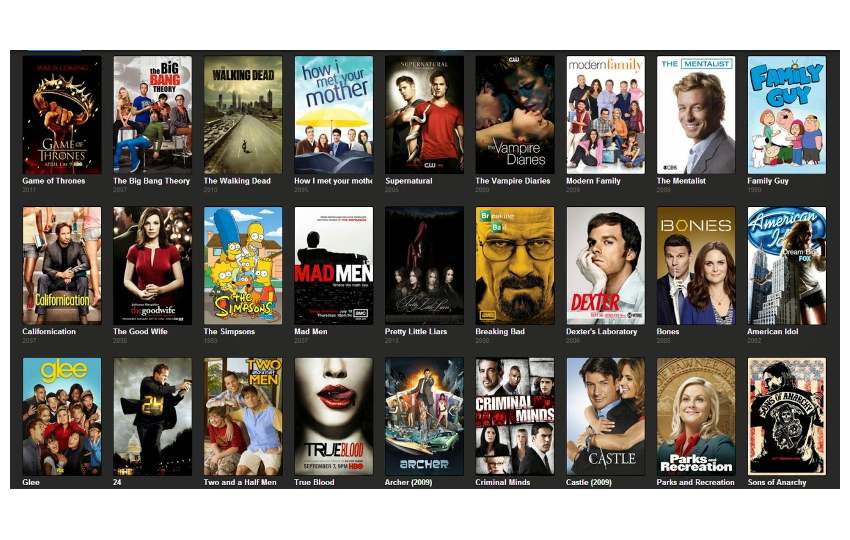
Here in Spain we have Netflix -which I love-, Amazon Prime video -which I have mixed feelings because I use chromecast and Amazon forces to us to use its FireStick, but I love their TV Shows- and recently appeared HBO and Sky with a very poor catalog. Besides that, spanish companies have the bad habit to buy a season of a TV Show, years later of its release and many times, they doesn't buy a second season or wait endless years to buy and dub another season.

So, as legislation in Spain lets do it whilst there is no economical revenue, and we can't access to many titles, and perhaps we never will, I donwload some TV shows I'm unable to view in my country. I also download Amazon TV Shows to see them through the chromecast, yet I could see them on the smart phone...

With sickrage, once configured, we can search for a TV show and it searches on NZB and torrent sites and auto download them on the TV Shows folder of Plex. Furthermore, you also get noticed when a new episode is released and downloaded through Telegram and magically appears once downloaded on the Plex Library. It can also fetch the subtitles, just like Plex does.

On Android, there is a open source app called ShowsRage which connects to the SickRage server and can add new shows -for example, when you are on the bar with a friend and he tells you he started a new amazing TV Show- and you quickly add it and forget about it.

Another docker is running this service, with direct access to the NAS filesystem, to store the shows and its configuration. The reverse proxy publishes the service through HTTPS with the LestEncrypt certs.

OpenVPN + Tor
Browse anonymously and securely

To browse more anonymously and securely, there are some options out there. The usual is to pay for a reliable VPN provider who doesn't store any logs, preferably an European or South American provider and configure your devices through it. Tor network is another option, which is pretty secure but slow compared with the VPN solution. Using both adds a extra anonymity and security layer by encrypting everything twice and letting your ISP and VPN providers in the dark. So, with this technique, I can use my services at full speed while my browsing is yet very fast, encrypted and anonymous and the other tasks are slow, but I don't mind, as I used them occasionally.

I selected a mix of all the options. My published services are going directly to Internet through my ISP. All my devices uses the VPN provider I choosed which is pretty fast and anonymous, and offers double VPN encryption, and my dark services are going to the Internet through a Tor + VPN service, so my ISP only see I'm connecting to Tor, but when I stablish the P2P connection, I'm using the VPN address, on the other hand, my VPN provider sees the Tor output IP address.

Instead of buying a router capable of act as a VPN Gateway, I enjoyed creating a GNU/Linux gateway just for the fun. And it's great. I have a KVM virtual machine on the NAS which connects to my VPN provider and a docker container which is a Tor Gateway, which connnects itself to the VPN on the VM. I also set up a DHCP server on a docker container (because my ISP's router) is horrible and almost unconfigurable, and created some network segments to make the mobile devices and computers at home to use as default gateway the VPN Gateway, the published services like Nextcloud still uses the default router's gateway and the P2P services like Torrent or NBZ are using the Tor Gateway.

Finally, I'd set up another OpenVPN Server container which routes all incoming connections through my VPN server to my VPN provider, so I can connect from outside usign my own VPN server, or let a friend to try browsing anonymously through my own infraestructure ;)

Non computing-related things I love to do

TV Shows
The not-so-new addiction

Back in 2003 I didn't watch anything on TV. Movies were awful, and TV was even worse. So I spent my free time reading, playing role play games with my friends, or drinking some beers with them. One day, but, a friend of me downloaded Battlestar Galactica. Several friends went to his home each week just to see the show. That began an addiction for too long forgotten (since the days of my childhood), and it started a habit that I still do today. It seems that online platforms like Netflix and others have boosted this and nowadays, we're living a kind of TV Shows-mania: there are too much for us to see and many of them are pure crap, but there are many that are simply jewels.

I love sci-fi, fantasy, and thriller TV Shows. I love to see them with my wife or my friends, yet I see the freakiest ones by myself. I'm an avid consumer of them, and I'm subscribed to on-demand sites like Netflix, HBO, Showtime, or Amazon Video for their quality TV Shows. I always find time to see them: on the subway, while cooking, while eating at work...

Reading
A lifelong passion

I can't remember when I learned to read. Since I was a child, I loved to read. I remember I began to read all the few books present on my parent's house – including the Old and New Testament – some Spanish classical works, a large encyclopedia, and the Reader's Digest. I know that is a strange and awful reading, but I was just starting, and I was very avid to read… anything.

Years later, when I was 8, my cousin left me his copy of J.R.R. Tolkien's The Hobbit. That work let me enter into a wonderful world full of magic. I began to play role play games at 10, after having read The Lord of the Rings twice and The Silmarillion four times.

Fantasy opened the hunger for reading about another worlds, and Sci-fi widened and filled that hunger for travel those worlds and knowing the fascinating ideas of their creators. I've read hundreds of books, being fantasy, sci-fi, history and thrillers my favorites genres.

Despite the great appreciation, respect and recognition that I have for Tolkien, I'm enjoying the new generation of fantasy writers: Brandon Sanderson, Brent Weeks, Joe Abercrombie or Steven Erikson and the beloved Sir Terry Pratchett (R.I.P.). All these not-so-young-already writers have opened a new era in fantasy works. I'm enjoying the reborn of a genre for a long time gloomed with cheap copies of the Tolkien's works. These new writers are even taking the genre to the Big Screen and TV Shows, which I'm not pretty sure if I like it or not.

Writing
Plant a tree, have a child and...

Said a wise that every man will be remembered for his works. In something that survives him, in something that will last after his death.

I have already planted a lemon tree, but living in a big city and not being good at planting anything, I doubt that tree will last me. I'm the proud father of one wonderful boy, and happily married with the best person I know, the strongest woman on Earth, both of them are the joy of my life. But since I was young, I loved reading those awesome novels which transport me to another worlds, and as couldn't be otherwise I decided to start writing.

I wrote many histories before, but merely to set up a world for my roleplay games sessions. I did loved to create a world, an idea, a story for my players to interact with. But recently I imagined a story, fragments of scattered and unconnected ideas I dind't see in any TV Show or readed in any novel. And I started to write them down on a notebook.

After starting the first phrase many times, I did realized that writing paragraph after paragraph was in fact pretty easy. When the first chapter was completed, I noticed that I had wrote wasn't any of the ideas I wrote on that notebook. Anyway, I liked the written so I began to modify those notes to adapt them to the chapter.

I write whenever I find a gap between the thousand things that fill my days. Weeks can pass between sessions, but the story keeps growing. I hope to publish it in the not-too-distant future — not because I need to be a well-known writer, but because I've come to believe this story deserves to be shared. And honestly, I simply love doing it.

Contact Me

If you want to know more about me, don't hesitate to contact me. I'm not in any social network besides LinkedIn, so please fill the form right below. I promise I will answer you as soon as I can.

* These fields are required.